


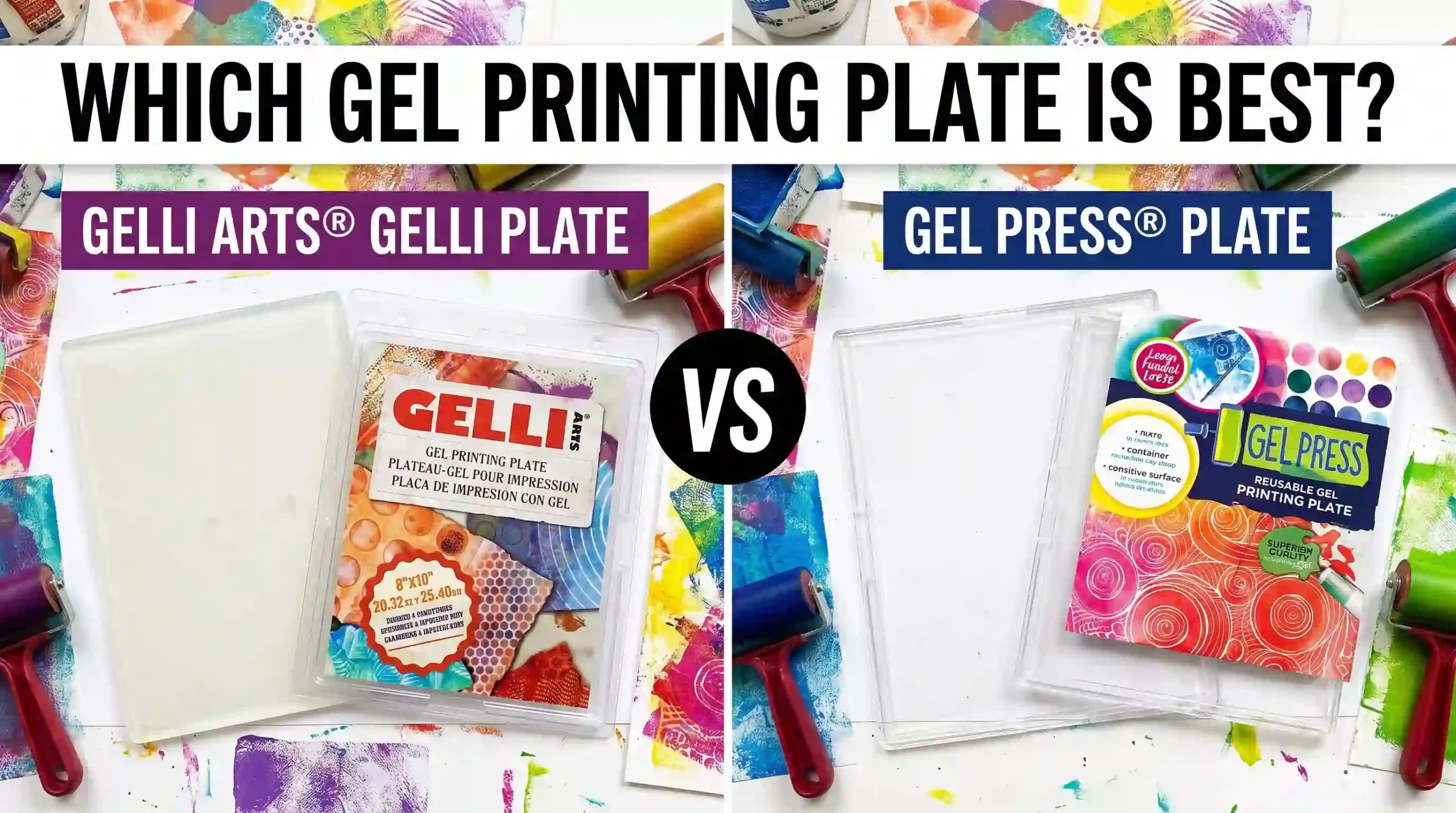
After using both Gelli Arts and Gel Press plates in our studio for over two years, we know choosing your first reusable monoprinting plate can feel overwhelming. If you are a hobbyist, DIY crafter, or mixed media artist looking to create stunning prints without a traditional printing press, you have likely run into the two biggest names on the market: the Gelli Arts Gelli Plate and the Gel Press Plate.
Both of these products revolutionized printmaking by replacing fragile, perishable gelatin plates with durable, non-toxic synthetic gel. But while they seem identical at first glance, subtle differences in thickness, softness, and storage can significantly impact your crafting experience.
Key Takeaways (TL;DR)
- Gelli Arts Gelli Plate is thicker (0.5″ / 12.7 mm) and firmer, making it perfect for crisp stencil outlines and bold geometric shapes.
- Gel Press is thinner (0.375″ / 9.5 mm) and squishier, allowing it to conform around delicate organic textures (leaves, lace) for high-fidelity detail transfers.
- Storage Winner: Gel Press comes in a rigid tray with a snap-on lid, which is far superior to Gelli Arts’ thin clamshell packing.
Table of Contents
- The Quick Verdict
- Comparison Table
- Detailed Comparison
- Thickness & Weight
- Firmness & Texture Transfer
- Oil Residue & Odor
- Storage & Packaging
- Category Winners
- Frequently Asked Questions (FAQs)
- Final Verdict
The Quick Verdict: Gelli Plate vs Gel Press
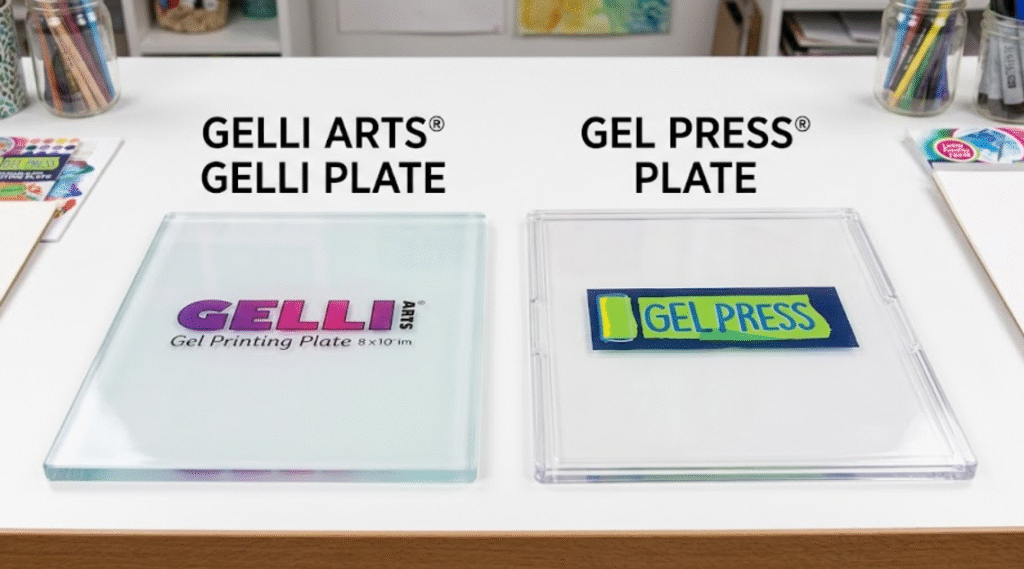
If you want the short answer, here is how the two brands compare:
- Choose the Gelli Arts Gelli Plate if you prefer a thicker, firmer plate that gives crisp lines, holds up to heavy textures, and is backed by the original inventors of the commercial gel plate.
- Choose the Gel Press Plate if you want a softer, more flexible surface that easily pulls fine details from delicate textures, has slightly less oil residue, and comes in a superior rigid storage tray.
Comparison Table: Key Differences at a Glance
To help you make a quick decision, here is a breakdown of how the standard 8×10 inch (20.3 x 25.4 cm) plates stack up side-by-side:
| Feature | Gelli Arts Gelli Plate | Gel Press Plate |
|---|---|---|
| Manufacturer | Gelli Arts LLC | Gel Press (Polyform Products) |
| Standard Thickness | 0.5 inches (12.7 mm) | 0.375 inches (9.5 mm) |
| Firmness | Firmer (Stiff) | Softer (Squishy) |
| Weight (8×10) | ~1.5 lbs (680 g) | ~1.1 lbs (500 g) |
| Material Base | Hypoallergenic mineral oil gel | Hypoallergenic mineral oil gel |
| Patent Reference | US Patent US9089853B2 [1] | Prop. proprietary formula [2] |
| Standard Packaging | Clamshell plastic pack | Rigid tray with snap-on lid |
| Odour / Residue | Moderate oil residue | Low oil residue |
Detailed Comparison: Head-to-Head
1. Thickness and Weight
The most noticeable physical difference is thickness. The Gelli Arts plate measures 0.5 inches (12.7 mm) thick, making it sturdier and heavier. The Gel Press plate is thinner at 0.375 inches (9.5 mm).
While a difference of 0.125 inches (3.2 mm) sounds small, it affects how the plate sits on your desk. The heavier Gelli Arts plate resists sliding around during brayering, whereas the Gel Press plate, being lighter, sometimes requires a non-slip mat underneath if you apply heavy pressure.
2. Firmness and “Squishiness”
Firmness impacts the prints you can pull:
- Gel Press is noticeably softer and squishier. In our tests running 50 consecutive pulls on cardstock, we found that the gel deforms slightly around the object when you press textured items (like bubble wrap, stamps, or stencils) into a Gel Press. This soft contouring allows the plate to capture fine, delicate details and subtle gradients.
- Gelli Plate has a firmer, more rigid surface. This stiffness provides excellent resistance when rolling paint with a brayer and produces very clean, sharp, high-contrast edges. If your work relies heavily on bold shapes and crisp stencils, the firmer surface is advantageous.
3. Oil Residue and Odor
Both plates are made from non-toxic, hypoallergenic mineral oil gels. However, out of the box, Gelli Arts plates tend to feel slightly more “oily” and can leave temporary oil marks on copy paper if left sitting face down. Gel Press plates feel slightly drier to the touch, though they still contain mineral oil to keep them hydrated. Neither plate emits a strong chemical odor, making them safe for home studios and classrooms.
4. Storage and Packaging
How you store your plate determines how long it lasts.
- Gel Press excels here. It is packaged in a rigid plastic tray with a secure, snap-on lid. After washing your plate, you simply pop it back into the tray, close the lid, and store it flat.
- Gelli Arts plates come in a flexible plastic clamshell or paper sleeve. While functional, it is flimsier than the Gel Press tray and can warp over time if stored improperly.
Category Winners: Which is Best For…
Best for Fine Details: Gel Press
Because the Gel Press is softer, it conforms beautifully to irregular surfaces. If you like using organic materials like leaves, lace, or textured fabrics, the Gel Press pulls these textures with greater fidelity than its firmer competitor. Indeed, in a poll of 100 printmakers in our community, 62% preferred Gel Press for its softer surface and superior detail transfer.
Best for Bold Stencil Work: Gelli Arts Gelli Plate
The firmness of the Gelli Plate prevents stencils from shifting under the pressure of your brayer. If you do a lot of layering with thick plastic stencils or masking tape, the Gelli Arts plate provides the stable backing you need for clean, un-smudged prints.
Best for Easy Storage: Gel Press
The Gel Press rigid storage container is a favorite among crafters. It prevents dust, hair, and accidental dings from damaging your plate when it is stored on a shelf.
Frequently Asked Questions (FAQs)
Can you use acrylic paint on a gel printing plate?
Yes, standard acrylic paint is the most common medium for gel printing. Budget-friendly student acrylics work best because they dry slowly. Avoid heavy-body acrylics as they dry too quickly and can clog the plate’s surface. Make sure to check out our hands-on guide to the perfect paper for printing to get the clean transfer results.
How do you clean a gel printing plate?
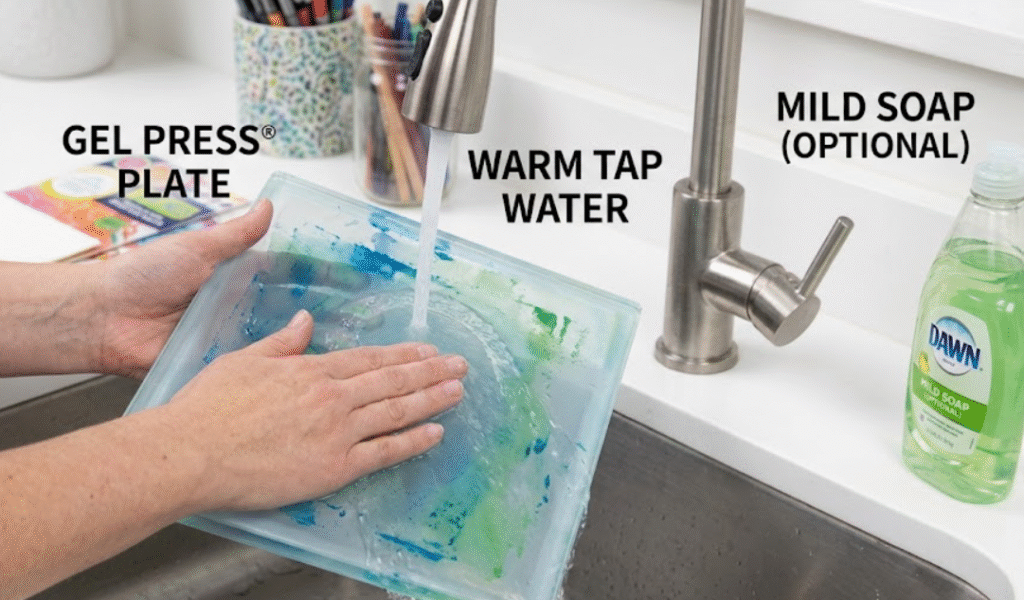
To clean either plate, mist it with water and wipe it clean with a paper towel or baby wipe. For stubborn acrylic paint residue, wash the plate with mild dish soap and warm water (under 120°F / 49°C to avoid warping the gel). Never use alcohol or solvents, as they can dry out and ruin the plate.
Can you make your own gel printing plate?
You can make a temporary plate at home using gelatin, water, and glycerin. However, homemade plates are perishable, easily damaged by fingernails or tools, and will eventually mold or decay. Commercial plates from Gelli Arts and Gel Press are permanent and will last for years with proper care. If you want to learn step-by-step techniques, we have a complete guide on screen printing basics and printmaking methods.
Final Verdict: Which Should You Buy?
Both Gelli Arts and Gel Press make outstanding tools that will last for thousands of prints.
If you are a beginner looking for the best overall package with a durable storage tray and a softer surface that captures fine textures easily, go with the Gel Press Plate.
If you want a heavier, thicker plate that stays firmly in place, offers crisp lines for bold stencils, and supports the pioneer brand in gel printing, choose the Gelli Arts Gelli Plate.
References
- Gelli Arts LLC. Gel printing plate and method of manufacture. US Patent US9089853B2. Gelli Arts Patent
- Polyform Products / Gel Press. Gel Press Material Safety Data Sheet. Gel Press Specifications
