


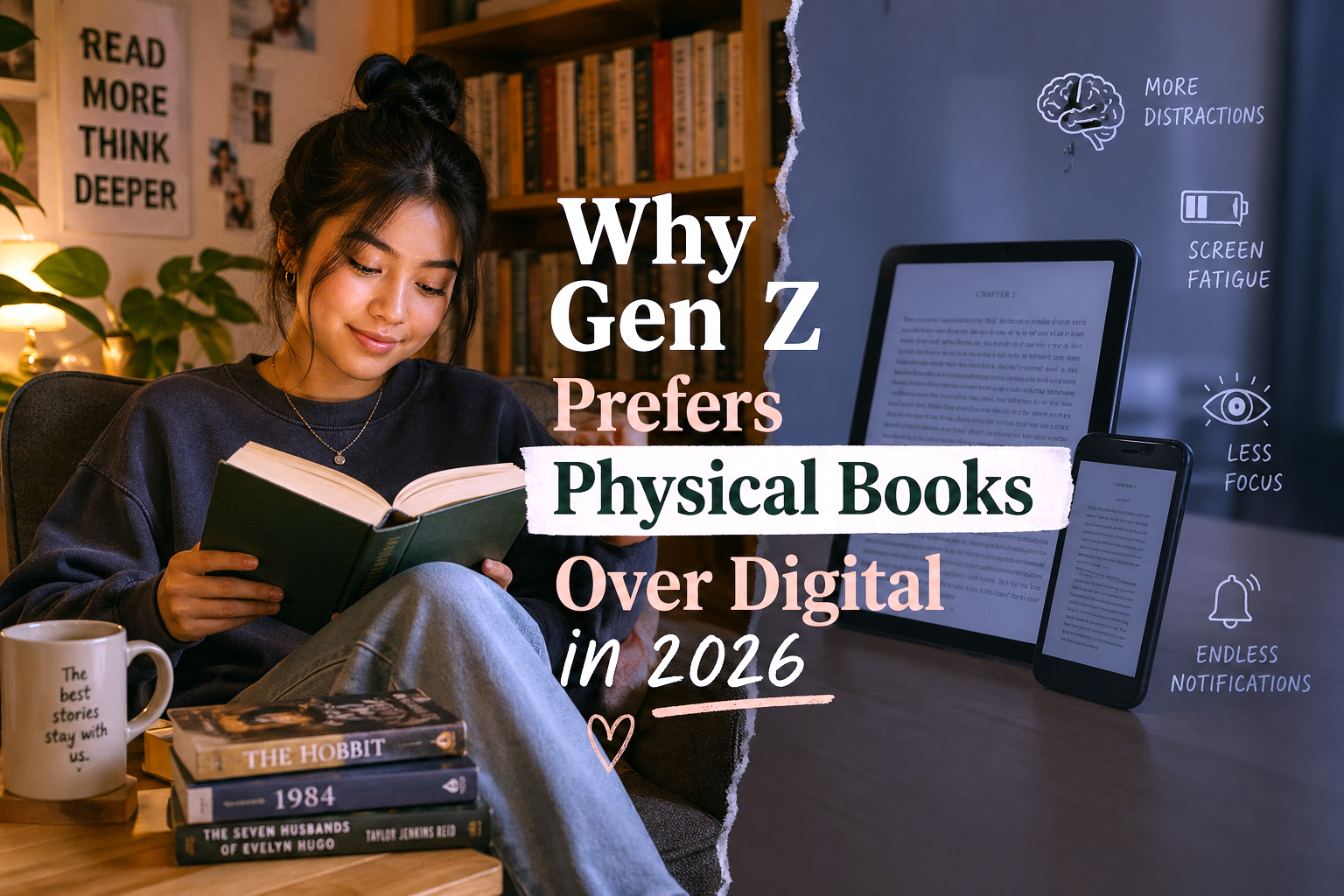
Let’s be real: our weekly screen time reports are honestly terrifying. Between school, remote work, chaotic group chats, and the endless algorithm feeding us content, our brains feel completely deep-fried.
But right now, the most extremely online generation is doing something totally unexpected. Gen Z is logging off, putting their phones on Do Not Disturb, and single-handedly saving the print industry. From hunting down the latest spicy romantasy novels to collecting aesthetic indie zines, paper is officially cool again.
If you are wondering why are physical books making a comeback, the answer is pretty simple: we desperately need a break. Here is a deep dive into why Gen Z is driving a massive surge in print, and why the future of reading is totally analog.
Books Are the New Designer Bags
Forget expensive purses or hyped sneakers—the ultimate status symbol right now is a battered paperback. Paparazzi constantly catch celebrities like Bella Hadid and Kendall Jenner using physical books as literal fashion accessories.
Carrying a book with a gorgeous cover signals something specific: it says you are mysterious, intellectual, and, most importantly, offline. It’s the ultimate “main character” prop. Whether you’re riding the subway or sitting at a local cafe, reading in public has become a subtle flex that shows you have the attention span to exist outside the digital world.
Doomscrolling is Out, Turning Pages is In
Most of us spend upwards of seven to nine hours a day staring at glowing rectangles. That level of digital burnout is exactly why a major shift in Gen Z reading habits is happening. We don’t want another app to manage. We want to disconnect.
If you are figuring out how to reduce screen time with physical books, the secret is the complete lack of notifications. When you read on a phone or tablet, you are one accidental swipe away from TikTok or an anxiety-inducing email. A physical book is a single-tasking experience. It doesn’t ping, it doesn’t need to be charged, and it forces you to actually slow down.
“A physical book doesn’t ask for your location data or serve you targeted ads. It just tells you a story.”
The benefits of reading physical books over screens go way beyond just avoiding blue light before bed. Studies actually show that reading on paper improves your memory, helps you focus longer, and dramatically lowers stress levels. It’s the ultimate “touch grass” moment, right from your bed.
The BookTok Effect: Tropes, Tears, and Aesthetic Shelves
It’s completely ironic that the biggest driver of physical book sales is a digital app, but you can’t talk about the print revival without talking about TikTok. #BookTok has billions of views, completely transforming forgotten paperbacks and niche titles into overnight global bestsellers.
But here is the catch: Gen Z doesn’t just want the digital e-book version. We want the physical copy so we can perform the aesthetic of reading.
Hunting down BookTok recommendations in print has become a lifestyle. It’s about grabbing an iced matcha, picking out a gorgeous cover (like the massively popular A Court of Thorns and Roses series), and obsessing over specific tropes like “enemies to lovers” or “morally grey love interests.”
Plus, having a physical library is essential for the grid. Stacking up your aggressively annotated books, showing off your cracked spines, and color-coordinating your shelves turns a solitary hobby into a highly visual, shared experience.
Bookstores Are Our New “Third Space”
Let’s face it: going out is expensive. Clubs, dinners, and concerts drain your bank account instantly. Because of this, indie bookstores and public libraries have become the ultimate Gen Z “third space” (a place outside of home and work where you can just exist).
Browsing the aisles of a local bookstore is a low-stakes, high-vibe activity. It’s a place to meet up with friends, romanticize your weekend, and maybe discover a new wave of independent magazines popular with Gen Z.
We aren’t talking about the glossy, ad-filled celebrity gossip magazines of the 2000s. We are talking about thick, beautifully designed publications about underground music, sustainable fashion, film photography (like Aperture), or skate culture (like Thrasher). They feel more like collectible art pieces than standard reading material.
The Tactile Reading Experience vs Digital: Why Paper Wins
At the end of the day, humans like to touch things. When you compare the tactile reading experience vs digital scrolling, paper wins every single time.
- The Smell: You can’t replicate the smell of a brand-new book (or the vanilla-scented pages of an old thrifted one) on an e-reader.
- The Weight: Feeling the weight of the pages shift from your right hand to your left provides a satisfying sense of progress that a digital percentage bar just cannot match.
- The Unhinged Personalization: Gen Z loves to destroy their books in the best way possible. We highlight, dog-ear, write unhinged thoughts in the margins, and use cute receipts as bookmarks. The book becomes a physical diary of how you felt when you read it.
Digital media is rented; it lives in the cloud and can be ripped away by a glitch or a subscription cancellation. But a physical book? That is yours forever.
Time to Unplug
The Gen Z print revival isn’t just a fleeting Y2K trend like low-rise jeans or digital point-and-shoot cameras. It is a very real rebellion against digital fatigue. We are craving things that are tangible, permanent, and quiet.
, next time you catch yourself doomscrolling for an hour straight, do your brain a favor. Toss your phone across the room, grab a physical book or a fresh indie magazine, and remember how good it feels to just turn a page.
What was the last physical book that absolutely destroyed you (in a good way)? Drop your recommendations in the comments below, and share this article with your favorite bookstore-hopping friend!
