


DTF vs DTG for Black Cotton Shirts: The Ultimate Guide

If you are launching a custom apparel brand or upgrading your print shop equipment, you have likely run into the great debate: Direct-to-Film (DTF) vs Direct-to-Garment (DTG). While both methods produce incredible, full-color designs, printing on black cotton shirts is where the true differences in chemistry and production workflows reveal themselves.
Black 100% cotton is notoriously difficult to print on because it requires a dense white underbase to make the colors pop. If that underbase isn’t applied perfectly, the final print will look muddy, muted, and unprofessional.
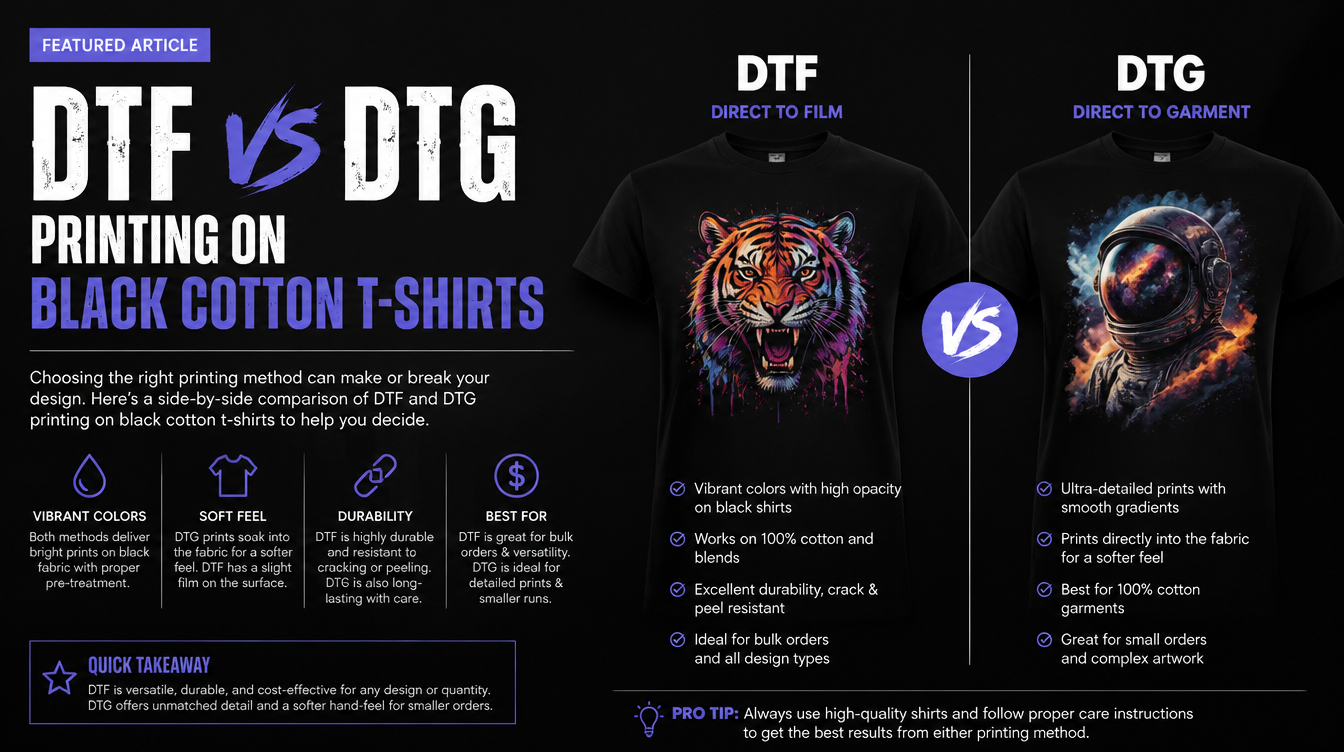
The Quick Answer: Choose DTG if you want a premium, ultra-soft “retail” feel where the ink absorbs directly into the fabric. Choose DTF if you want maximum color vibrancy, extreme wash durability, and want to completely skip the tedious pretreatment process required for dark garments.
Let’s break down exactly how these two powerhouse printing methods compare when tackling the holy grail of apparel: the black cotton t-shirt.
1. The Hand Feel (Softness)
When it comes to the “hand” (the way the print feels when you run your fingers across it), there is a distinct difference between the two technologies.
- DTG on Black Cotton: DTG printers spray water-based inks directly into the cotton fibers. Even with the required white underbase, a properly cured DTG print is incredibly soft and breathable. Industry-leading machines, such as the Brother GTXpro, have set the retail standard for feeling like a natural part of the shirt.
- DTF on Black Cotton: DTF involves printing the design onto a special PET film, coating it in adhesive powder, and heat-pressing it onto the shirt. Because the design is technically a transfer, it sits on top of the fabric. While modern DTF is much thinner than traditional vinyl, it still has a smooth, slightly rubbery texture.
2. Pretreatment: The Hidden Bottleneck
This is arguably the most critical difference for print shop owners to consider regarding production speed and labor costs.
To print DTG on any dark garment, you must apply a specialized liquid pretreatment solution. This liquid acts as a primer, preventing the white ink from soaking entirely into the dark cotton fibers. Applying pretreatment requires a dedicated spraying machine, precise curing with a heat press, and can sometimes leave a faint, visible “box” around the print until the shirt is washed for the first time.
DTF completely eliminates the need for pretreatment. Because the white underbase is printed directly onto the film along with the color inks, you simply press the finished transfer onto a blank black shirt. This makes DTF vastly more efficient for bulk orders of dark garments.

3. Vibrancy and Durability
Both methods offer stunning full-color, photographic prints, but they age differently over time.
Because DTF designs use a melted thermoplastic adhesive powder to bond with the fabric, they are incredibly durable. DTF prints resist cracking and fading exceptionally well, often surviving 50 to 100+ heavy wash cycles while maintaining their original glossy vibrancy.
DTG prints, on the other hand, have a softer, more matte appearance. Because the water-based ink is embedded in the cotton, it will naturally undergo some “fibrillation” (where tiny cotton fibers poke through the ink) over dozens of washes, leading to a slightly faded, vintage look over time.
Summary Comparison Chart
| Feature | Direct-to-Garment (DTG) | Direct-to-Film (DTF) |
|---|---|---|
| Hand Feel | Very soft, breathable | Smooth, slightly raised texture |
| Pretreatment | Required for black/dark shirts | Not required |
| Durability | Good (natural fading over time) | Excellent (resists cracking/fading) |
| Setup Speed | Slower (requires prepping shirts) | Fast (print and press immediately) |
Frequently Asked Questions
Can you use DTF on fabrics other than cotton?
Yes! This is a massive advantage of DTF. While DTG is strictly limited to fabrics with at least 80% cotton, DTF transfers can be pressed onto 100% polyester, nylon, leather, and blends without any issues.
Which printer is cheaper to maintain?
Both systems require daily maintenance to prevent white ink from clogging the printheads. However, DTF printers are generally more prone to clogging due to the thicker viscosity of the white ink required for film transfers, making them slightly higher maintenance if not run daily.
The Final Verdict: If you are printing luxury streetwear where customers demand the softest possible feel on black cotton, you should explore our one-stop guide for high-quality DTG printing. However, if you are running a high-volume shop focused on durability, bright colors, and fast turnaround times without the hassle of pretreatment chemicals, DTF is the superior choice for black cotton.
