


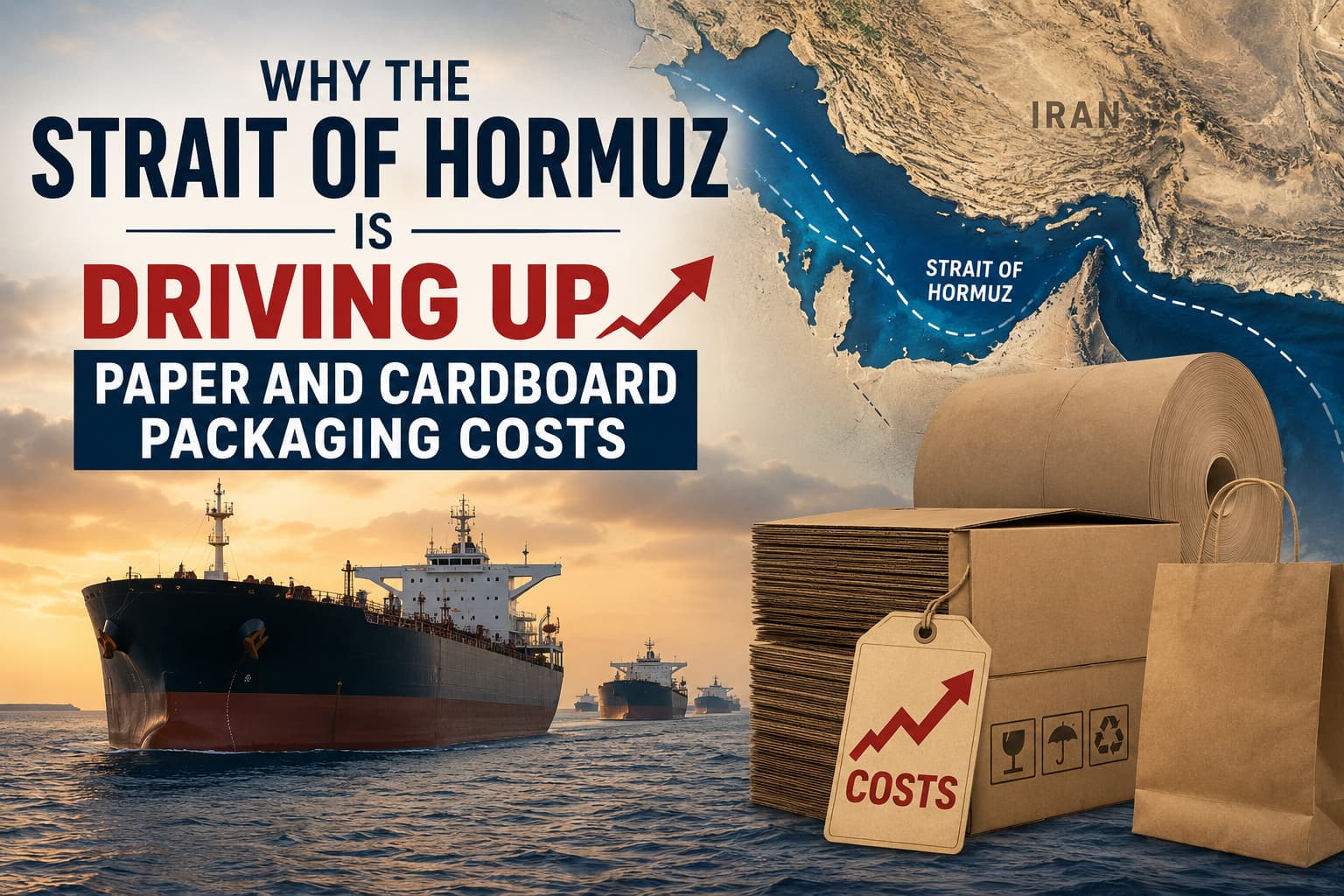
Executive Summary: Why Are Paper Prices Rising?
- Energy Costs: The Strait of Hormuz (also spelled Hurmuz) handles 20% of global oil. Shipping bottlenecks spike global energy prices, and paper milling is an incredibly energy-intensive industry.
- The Plastic Pivot: The Middle East exports the petrochemicals needed for plastic packaging. As plastic costs rise, brands are pivoting to paper, stressing global supply.
- Freight Surcharges: Paper is heavy. Rerouted cargo ships and rising war-risk insurance premiums directly inflate the shipping costs of heavy, bulky commodities like corrugated cardboard.
If you run a business, you probably don’t spend your mornings stressing over maritime traffic in the Middle East. But if your company relies on paper whether that’s a mountain of corrugated shipping boxes, slick retail packaging, or basic office supplies you need to start paying attention to the Strait of Hormuz (often searched as the Strait of Hurmuz).
Normally, when the news mentions this narrow chokepoint between the Persian Gulf and the Gulf of Oman, we brace for a spike at the gas pump. But there is a direct, undeniable link connecting this volatile waterway straight to the cost of the paper products sitting in your warehouse right now.
Here is the supply chain breakdown of why a bottleneck halfway across the world is about to make your paper packaging a lot more expensive and how you can shield your bottom line from rising costs.
1. Why Making Paper Packaging is a Massive Energy Hog
Let’s clear up a misconception: making paper isn’t a gentle, low-impact craft. It is a heavy-duty, industrial-scale baking project. Boiling down raw wood fiber, recycling tough old corrugated cardboard, and blasting wet pulp until it’s bone-dry paper requires absolutely massive amounts of heat, steam, and electricity.
- The Global Energy Shock: Here’s where Hurmuz comes in. Roughly 20% of the world’s oil and a huge chunk of global liquefied natural gas (LNG) flow through this single corridor. When geopolitical tensions rise and ships are delayed, global energy prices go through the roof.
- The Squeeze on Paper Mills: When oil and natural gas prices spike, the utility bills for paper mills skyrocket. Mills can’t just eat those massive operational losses, so they pass the buck down the supply chain. If you haven’t seen an energy surcharge pop up on your packaging supplier invoices yet, brace yourself—it’s coming.
2. The Petrochemical Link: The Great Migration from Plastic to Paper
The Strait of Hormuz isn’t just a highway for gasoline; it’s the main global artery for the chemical building blocks used to manufacture plastic.
- Plastic Packaging Prices are Peaking: Because the Middle East dominates the export of petrochemical feedstocks (like naphtha) needed to make everything from bubble wrap to plastic clamshells, the cost of plastic packaging is hitting multi-year highs.
- The Paper Panic Buy: What happens when plastic gets too expensive or politically risky to source? Brands panic and pivot to paper alternatives. This sudden, frantic spike in demand for fiber-based packaging is colliding head-on with an already stressed supply chain. It’s classic supply and demand economics: everyone wants paper right now, which means raw paper gets pricey.
3. Global Freight Surcharges: Paper is Heavy and Expensive to Move
Paper and pulp are heavy, bulky commodities. Moving them from forests to mills, and then from manufacturers to your loading dock, relies entirely on cheap, smooth global shipping lanes.
- Rerouting Cargo Ships: With the strait compromised and regional tensions flaring, global shipping lines aren’t taking chances. They are actively rerouting massive cargo vessels around the Horn of Africa. That means significantly longer transit times and a severe shortage of available shipping containers.
- Paying for the Weight: War-risk insurance premiums for cargo ships have exploded, and ships are burning far more bunker fuel to take these longer routes. Because paper is so heavy, it is uniquely vulnerable to these ocean freight hikes. You are no longer just paying for the cardboard; you are paying a massive premium just to drag it across a broken map.
Supply Chain Strategy: How to Protect Your Business from Rising Costs
The economic ripple effects are already crashing into the B2B market. It’s no longer a matter of if your paper packaging costs will go up, but by how much. Here is your procurement survival guide:
- Lock Down Your Supplier Contracts: Review your packaging contracts immediately. Lock in your pricing where you can, but read the fine print carefully so you aren’t blindsided by sudden freight or energy surcharges.
- Stockpile Essential Inventory: If you rely on specific, custom grades of paper or essential corrugated boxes, build up a buffer inventory now. Don’t wait until lead times double.
- Nearshore Your Packaging: Stop relying entirely on overseas manufacturers. Sourcing your packaging regionally might have looked expensive last year, but when you factor in today’s inflated ocean freight costs, local suppliers are suddenly looking like a bargain.
The global supply chain is a giant, tangled web. A traffic jam in the Middle East doesn’t just mean expensive fuel it means the cardboard box landing on your loading dock is about to cost your business a whole lot more.
