


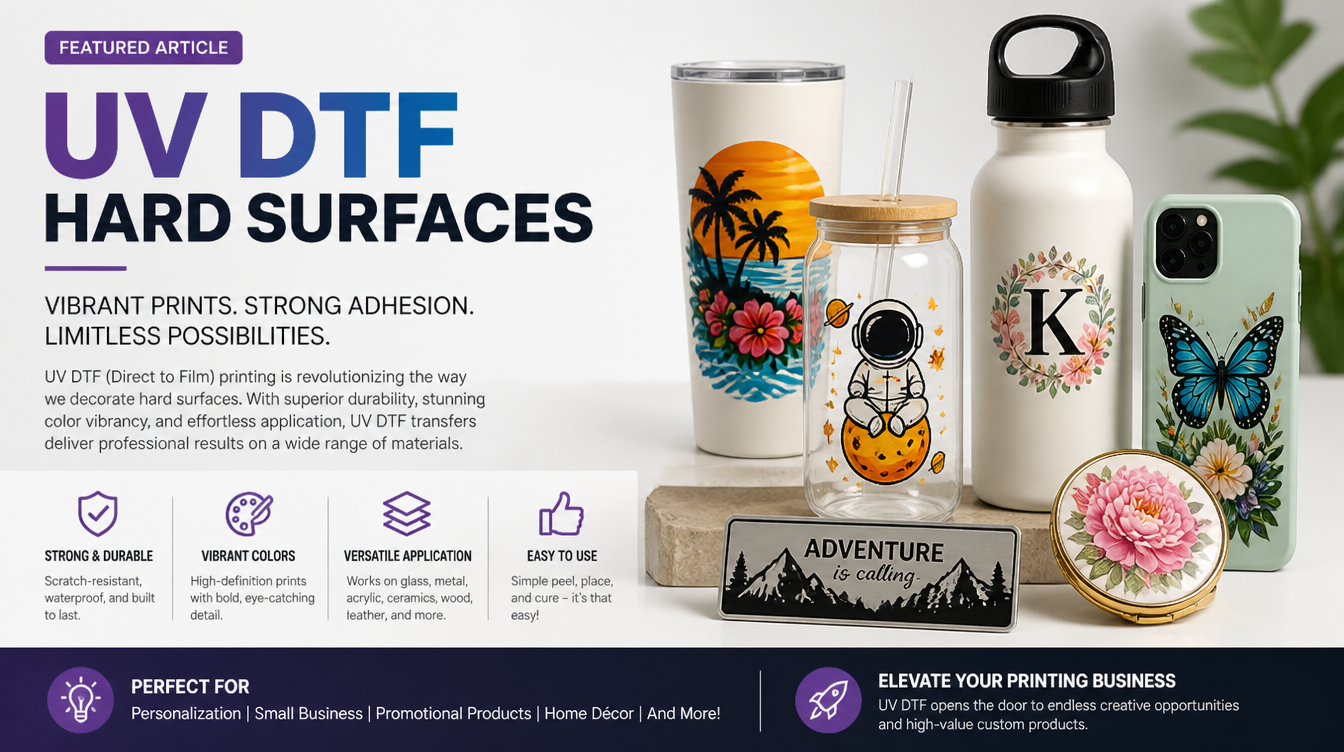
Top 5 Hard Surfaces You Can Print on With UV DTF Transfers
The true beauty and disruptive power of UV Direct-to-Film (UV DTF) printing lies in its absolute, unbridled versatility. For decades, the custom printing industry has been boxed in by specific material requirements. DTG (Direct-to-Garment) required cotton. Sublimation required polyester. Standard DTF required fabric.
UV DTF shatters all of those rules. Because these decals rely on a high-strength industrial adhesive backing rather than heat activation or chemical bonding, you are no longer limited by the substrate’s melting point or polymer coating.
When print shop owners and crafters ask, what materials can you print on with uv dtf, the answer is genuinely staggering. If you want to scale your revenue in 2026, you need to expand your catalog beyond basic apparel. Here are the top 5 most profitable hard surfaces you can start decorating today with UV DTF technology.
The Golden Rule of Thumb: As long as the surface is hard, non-porous, smooth, and clean (completely free of oils, lint, and dust), a UV DTF decal will adhere permanently and resist water, sunlight, and scratching.
1. Glassware, Bottles, and Mirrors
This is arguably the biggest market currently driving the UV DTF boom. From trendy 16oz Libbey beer-can glasses for iced coffee to custom champagne and wine bottles for high-end weddings, UV DTF clings to smooth glass flawlessly.
The massive advantage here is the white ink base layer. If you try to apply a standard clear sticker to a dark-tinted wine bottle, the colors wash out and become invisible. Because a UV DTF printer lays down a solid layer of white ink underneath your CMYK colors, your designs remain totally opaque, vibrant, and readable, regardless of how dark or frosted the glass is.

2. Wood (Custom Signs and Plaques)
Creating custom wooden signs for home decor, weddings, or storefronts used to be a massive headache. It required tedious vinyl stenciling and hand-painting, or attempting expensive direct-to-garment (DTG) hacks that often resulted in bleeding ink.
Now, you can peel and stick full-color, photorealistic graphics directly onto wood. A critical note for wood applications: UV DTF requires a smooth surface to adhere properly. Heavily porous, rough-sawn, or splintered wood will not hold the decal well. You must ensure the wood is sanded perfectly smooth. For best results on highly porous wood, apply a quick coat of clear polycrylic or primer first to give the adhesive a solid, non-porous layer to grab onto.
3. Metal, Aluminum, and Stainless Steel
From custom novelty license plates and industrial equipment labeling to personalized stainless steel thermoses and Yeti-style coolers, UV DTF is tough enough to survive on metal. It bonds exceptionally well to powder-coated metal surfaces.
This is where UV DTF truly shines as a B2B product. You can print hundreds of company logos and apply them to stainless steel corporate gifts in a fraction of the time it would take to laser engrave them. To understand exactly why UV DTF beats traditional heating methods on metal drinkware, read our detailed breakdown on UV DTF vs Sublimation: Which is Best?.
4. Ceramics and Porcelain
Custom coffee mugs, decorative plates, and ceramic tiles are staples of the custom goods industry. UV DTF allows you to add gorgeous, embossed 3D textures to standard, inexpensive dollar-store ceramics without needing to bake them in a kiln or oven.
While the industrial adhesive creates a highly durable bond on ceramics, we always recommend advising your customers to hand-wash UV DTF mugs (rather than using harsh commercial dishwashers) to guarantee the 3D varnish layer lasts for years without chipping. If you are looking to scale your ceramic offerings, you can source great blank, un-coated ceramics in bulk from trusted suppliers like Johnson Plastics Plus.
5. Plastics, Acrylics, and Resins
If you are an Etsy seller or craft fair vendor, acrylic is your best friend. Acrylic keychains, wedding seating charts, hard plastic phone cases, and custom laptop covers are incredible low-cost, high-margin items.
UV DTF bonds perfectly to acrylic, providing a pristine, professional finish that looks directly screen-printed. Because acrylic is non-porous and ultra-smooth, it offers some of the strongest adhesion rates of any material on this list. You can buy cheap, blank acrylic rounds in bulk, apply a stunning UV DTF floral graphic in five seconds, and sell it as a premium bridesmaid gift.
Expanding Your Empire
The applications are truly endless. We have seen shops applying UV DTF to leather journals, motorcycle helmets, and even golf balls. If you are ready to jump into this incredibly diverse market and leave apparel printing behind, you need the right gear.
Check out our Ultimate Guide to Starting a UV DTF Business in 2026 to learn about the specific commercial roll-to-roll printers required to produce these high-margin transfers at scale.
