


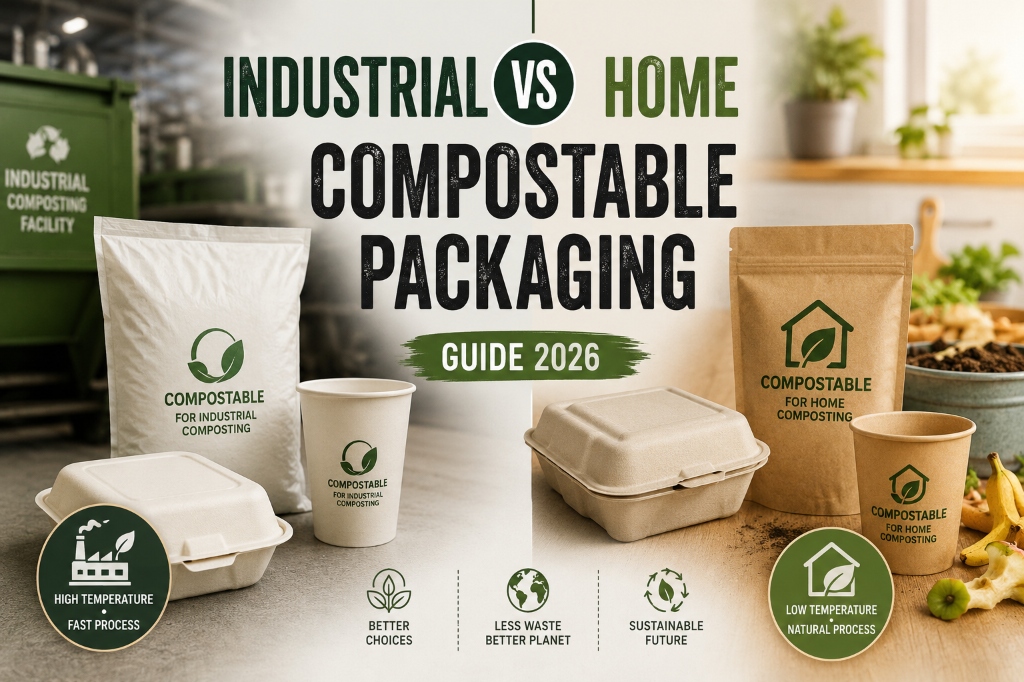
Industrial vs Home Compostable Packaging Guide 2026

If you run a print-on-demand store or ship physical products in 2026, slapping a generic “biodegradable” sticker on your shipping mailers is no longer just bad practice—it is a legal liability. As global governments crack down on deceptive environmental claims (known as greenwashing), businesses must provide substantiated proof of how their materials break down.
Welcome to the definitive industrial vs home compostable packaging guide. Understanding this distinction is the single most important step you can take to protect your brand’s reputation and avoid hefty regulatory fines under the new 2026 EU and US packaging directives.
The Core Difference: The difference between industrial and home compostability lies entirely in the temperature and controlled environment. Packaging that is “industrial” compostable will absolutely not break down in a standard backyard compost pile.
What is Industrial Compostable Packaging?
Industrial (or commercial) composting facilities operate under highly controlled conditions. To achieve the EN 13432 standard (the legal baseline in the EU), the facility maintains temperatures between 50°C and 70°C (122°F – 158°F) for several months. They strictly regulate moisture, oxygen flow, and microbial activity.
- The Material: Most industrial compostable packaging is made from PLA (Polylactic Acid), a bioplastic derived from corn starch or sugarcane.
- The Problem: If an end-consumer throws a PLA mailer into their backyard compost bin, the ambient temperature will never get hot enough to trigger decomposition. The mailer will simply sit there, looking exactly like traditional petroleum plastic, for years.
- The Law: Under the 2026 EU Empowering Consumers for the Green Transition Directive, labeling a PLA bag as generically “compostable” without specifying that it requires an industrial facility is now legally actionable greenwashing.
What is Home Compostable Packaging?
Home composting relies on the erratic, low-temperature environment of a typical backyard garden bin. The temperatures rarely exceed 30°C (86°F), and the moisture levels depend entirely on the weather and the homeowner’s diligence.
- The Material: True home compostable packaging is usually made from natural cellulose, specialized PBAT blends, or un-coated kraft paper. (If you are wondering how to source the right uncoated paper, check out our comprehensive Paper GSM Guide).
- The Benefit: These materials are designed to break down naturally in a low-heat environment within 12 months, leaving no toxic residue.
The 2026 Anti-Greenwashing Crackdown
Regulatory bodies across the globe are forcing transparency. The U.S. Federal Trade Commission (FTC) is aggressively updating its “Green Guides,” while the European Union has made substantiation mandatory.
Compliance Checklist for 2026:
Never use the word “Eco-friendly” in isolation. You must use recognized third-party certifications. For the US market, look for the official Biodegradable Products Institute (BPI) certification. For the EU, look for the TUV Austria OK compost HOME or OK compost INDUSTRIAL marks.
Summary Comparison
| Feature | Industrial Compostable (EN 13432) | Home Compostable |
|---|---|---|
| Required Temperature | 50°C – 70°C (High Heat) | Ambient / 20°C – 30°C |
| Time to Decompose | Within 180 days | Up to 365 days |
| Common Materials | PLA Bioplastics, CPLA | Cellulose, Kraft Paper, PBAT |
| Consumer Action | Must put in designated municipal green bin | Can throw in backyard garden pile |
Final Verdict for Shippers
If you are shipping physical goods to end-consumers, Home Compostable is the gold standard. Most consumers do not have access to municipal industrial composting facilities. Sending them industrial compostable packaging usually results in the item ending up in a landfill anyway, negating the environmental benefit and risking brand backlash.
Protect your brand in 2026: Source certified home compostable materials, print on them using water-based inks, and clearly educate your customer on exactly how to dispose of them.
